

Ion exchange
Industrial Demineralizer Systems
Updated
Industrial demineralizer systems for boiler and process water, designed from feed analysis, flow, conductivity targets, regeneration, and onsite waste limits.
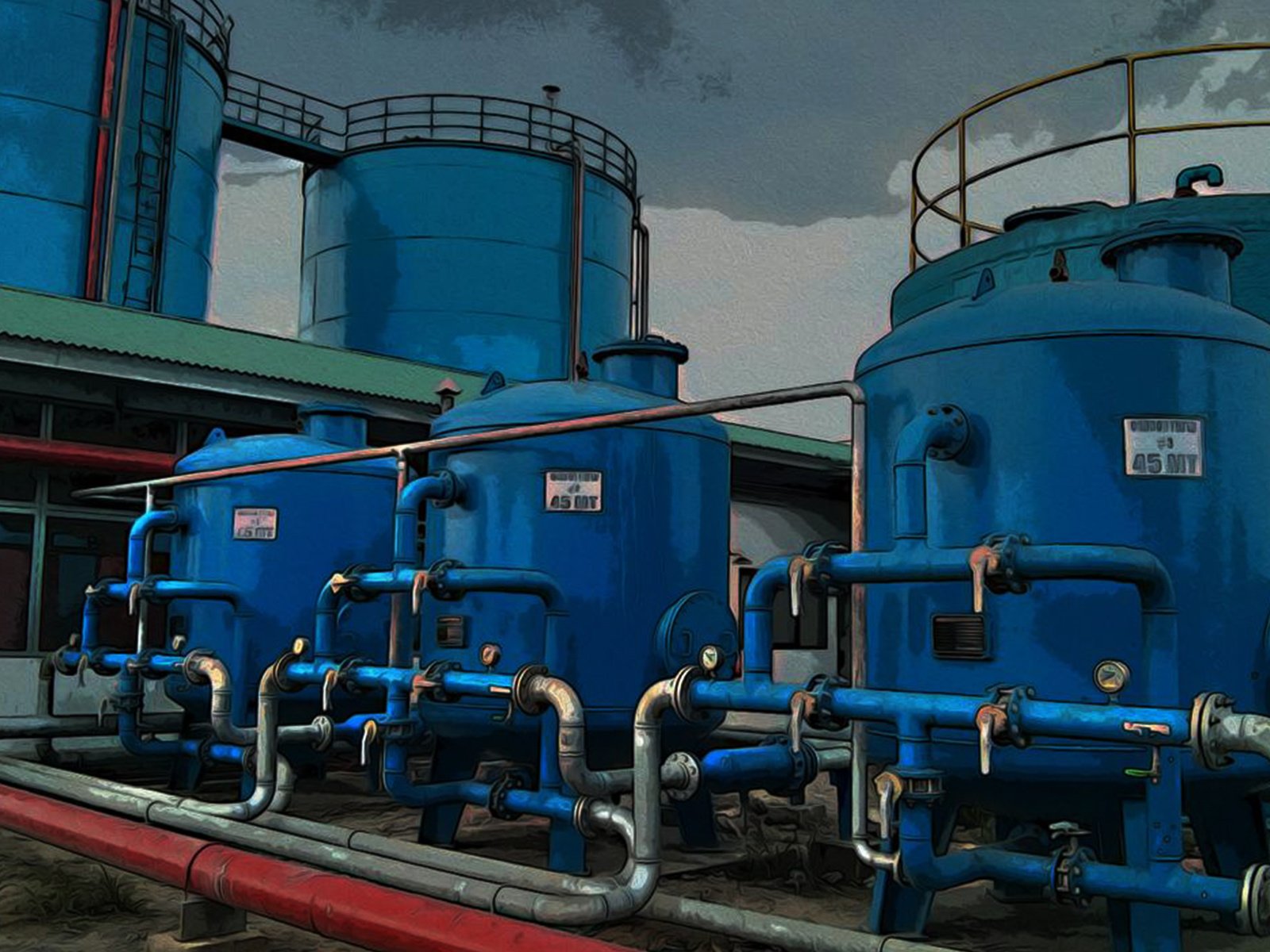
Discuss the application.
Send the application, operating conditions and the result you expect. Our team will discuss the options with you.
An industrial demineralizer removes dissolved mineral ions to meet a defined product-water specification, such as low conductivity. PT Beta Pramesti Asia designs and supplies demineralizer systems in Indonesia for boiler feed, industrial processes, pharmaceutical production, electronics, and laboratories. We size each system from the feed-water analysis, the flow you need, the operating cycle, and the product-water quality.
The right demin water system starts with raw-water analysis, product-water specification, flow rate, operating hours, regeneration needs, and regeneration-waste limits. Beta can help you decide whether the application needs softener + RO, RO + mixed bed, or a full ion exchange configuration such as SAC-SBA or SAC-Degass-SBA-MB.
Use the demin plant design and resin-sizing guide to prepare an auditable proposal basis. This includes the ion-load worksheet, hydraulic-loading check, regeneration acceptance criteria, and waste route.
A Demin Plant Is Needed When Dissolved Minerals Disrupt the Process
Demin water is needed when dissolved minerals can cause scale, corrosion, product contamination, or process instability. Common applications include boiler feed water, chemical process make-up, pharmaceutical rinsing, laboratory water, and electronics process water.
| Requirement | Typical target | Common configuration |
|---|---|---|
| Medium- to high-pressure boiler feed | Low conductivity, controlled silica | RO + mixed bed or SAC-Degass-SBA-MB |
| Chemical and petrochemical process water | Stable mineral-free water | SAC-SBA, RO + polishing, or mixed bed |
| Pharmaceutical and laboratory use | Process/reagent-grade water to internal specification | RO + polishing resin with quality monitoring |
| Electronics and precision rinsing | Very low TDS and minimal ionic contamination | Multi-stage RO + mixed bed/polishing |
Data Required for a Demineralized Water System Proposal
A comparable demineralizer proposal needs a consistent design basis. Prepare a complete feed-water analysis, average and peak flow, operating hours per day, the conductivity or other product-water targets, and limits for regeneration-waste volume and quality.
Also provide the water source, existing pretreatment, installation space, power supply, feed-water pressure, and product-water demand pattern. These inputs help the team select SAC-SBA, SAC-Degass-SBA-MB, or RO with mixed-bed polishing without adding unnecessary treatment stages. Send the design basis through the Beta Pramesti Asia contact page for technical review.
How Is a Demin Plant Configuration Selected?
A two-column SAC-SBA train is the basic ion-exchange configuration listed for this system. A degasser can be placed between the cation and anion stages. A mixed bed can polish the product when the conductivity and ionic leakage you need are tighter. RO or softening pretreatment may reduce the load reaching the ion-exchange stages. The choice must follow the feed analysis and the lifecycle operating basis.
| Configuration | What it does | When to assess it |
|---|---|---|
| SAC-SBA | Exchanges cations and anions in separate vessels | General demineralization where the product specification can be met without a polishing stage |
| SAC-Degass-SBA | Removes carbon dioxide between cation and anion exchange | Feed water with alkalinity that would otherwise add load to the anion stage |
| SAC-SBA-MB | Adds mixed-bed polishing after primary demineralization | Lower conductivity and tighter ionic leakage targets |
| RO + mixed bed | Reduces dissolved-ion load with membranes before final polishing | Sites comparing chemical regeneration demand, wastewater limits, and high-purity product requirements |
Common Questions
What is the difference between demin water and RO water?
RO water has passed through reverse osmosis membranes and usually has much lower TDS than raw water. Demin water is a mineral-free water quality target. It usually needs additional polishing such as mixed bed resin, depending on conductivity, silica, and sodium specifications.
Who supplies industrial demineralizer systems in Indonesia?
PT Beta Pramesti Asia supplies industrial demineralizer systems in Indonesia. This includes process design, local fabrication, ion exchange media, regeneration chemicals, water-quality instrumentation, commissioning and operating support.
What must be monitored after commissioning?
Track product conductivity and the specified leakage parameters, such as silica or sodium, against operating time and treated volume. Also record pressure loss, regeneration chemical use, rinse duration and waste-neutralisation performance. Then breakthrough or resin fouling can be investigated from operating evidence.
System Scope and Local Support
The supply scope can combine locally fabricated vessels or skids, ion-exchange media, valves, chemical storage and feed equipment, water-quality instruments, commissioning and operator support. Please confirm the exact battery limits, redundancy, automation level, regeneration-chemical scope and performance test in the proposal.
Typical Applications
- Power Plants: Demin water is used as boiler make-up when the steam-cycle specification needs tight control of conductivity, silica and sodium.
- Pharmaceutical Industry: Demineralization can form part of a treatment train designed around the facility’s approved process-water specification and validation needs.
- Electronics and Semiconductor Industry: A polishing train can be designed around the facility’s ionic-contamination limits for rinsing and precision cleaning.
- Chemical and Petrochemical Industry: Demin water limits unwanted ions entering sensitive process and product streams.
- Textile Industry: Hardness and metal-ion control supports dyeing and printing processes that are sensitive to precipitation and colour variation.
- Laboratories and Research: The system can be configured around the reagent-water grade and instrument specification the lab needs.
Compatible Products
- Softener: Assess before the demineralizer when hardness reduction can lower the load on downstream treatment.
- Brackish Water Reverse Osmosis: Assess BWRO when membrane pretreatment can reduce the dissolved-ion load before ion exchange or mixed-bed polishing.
- Betaqua Ultrafiltration: Assess UF when suspended and colloidal material must be controlled before the demineralizer train.
Installation Context
We configure Betaqua demineralizer systems to match the feed-water quality and the product specification we agree with you. The installation needs space for service and regeneration, ventilation, chemical storage that is compatible with the chemicals, separate acid and caustic handling, drainage, and neutralisation of regeneration waste before discharge. The proposal should state the vessel material, the utilities needed, the control philosophy, the sampling points, the commissioning tests, and what the operators are responsible for.